
Traffic Fine During a Car Rental: Who Receives It and Who Pays?
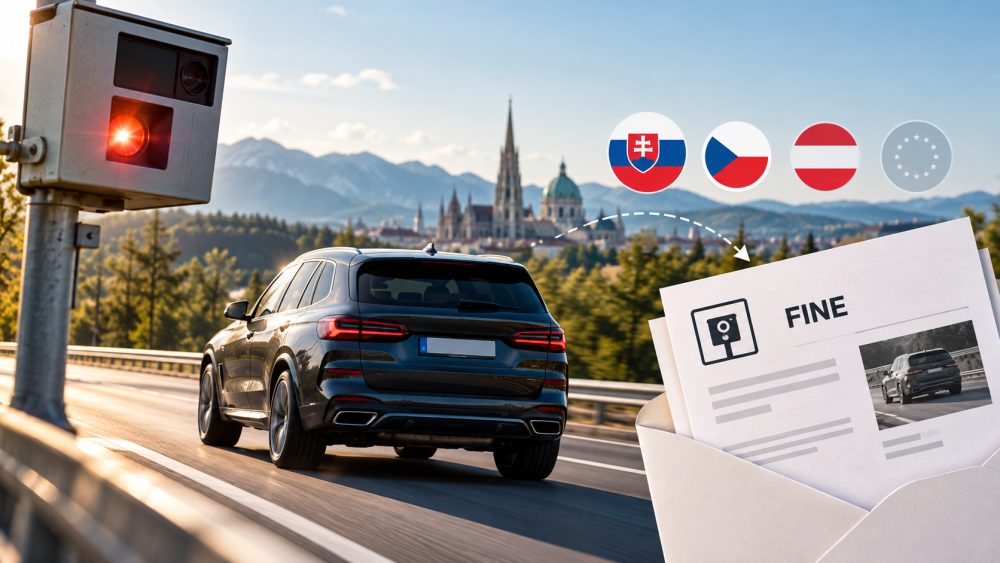
A fine notice is usually sent to us as the registered holder of the vehicle. Based on the rental agreement, we verify who was using the car at the time and, depending on the country and type of offence, handle the next steps. A €40 administrative fee is charged for processing the notice.
A fine notice is usually sent to us as the registered holder of the vehicle. Based on the rental agreement, we verify who was using the car at the time and, depending on the country and type of offence, handle the next steps. A €40 administrative fee is charged for processing the notice.
The first notice may come to us
When an offence is detected by a camera, the authorities initially see the vehicle’s registration plate rather than the person behind the wheel. With a rental vehicle, the notice may therefore first be sent to us as the registered holder or operator of the vehicle.
Based on the date, time and registration number, we then check the rental agreement and identify the rental period during which the offence occurred.
The notice does not necessarily arrive immediately. In the case of international travel, it may reach us several weeks or even months after the rental.
Who pays the fine?
This mainly depends on the country and type of offence.
Slovakia and the Czech Republic
For certain types of proceedings, the fine or specified amount may be addressed to the registered holder or operator of the vehicle.
If we are required to pay it, we settle the amount with the relevant authority and subsequently re-invoice the customer who had the vehicle rented at the time of the offence.
We do not determine the amount of the fine ourselves. It is set by the relevant authority.
Austria
The procedure may be different in Austria.
If the Austrian authorities send us a request to identify the driver, we provide the details of the person who was using the vehicle at the relevant time based on the rental agreement.
The authorities then continue the proceedings against the identified driver, and the driver deals with and pays the fine directly to the Austrian authorities.
The procedure therefore depends on the specific country and type of offence.
What do we charge?
We charge a €40 administrative fee for processing a fine or official notice, in accordance with our price list.
This is not a second fine or an additional charge imposed by the authorities.
It covers the administrative work involved in the case – locating the relevant rental agreement, checking the date and time, identifying the driver or rental, preparing and submitting the required information, communicating with the authorities and keeping a record of the case.
For example, if we pay a €50 fine on behalf of a customer in Slovakia, the customer will subsequently be charged:
€50 – the fine itself
€40 – administrative processing fee
If the case concerns Austria and the driver pays the fine directly to the authorities, we charge only the €40 administrative processing fee.
When will you be informed?
Once we receive a notice, we will inform you by email.
We will provide the available details about the offence, such as the date, time and location, and explain what happens next.
If you are unsure whether the offence actually occurred during your rental, the exact vehicle pick-up and return times in the rental documentation are important.
If it turns out that the offence was recorded outside your rental period, we will review the situation and provide the relevant documentation to the authorities if necessary.
What about foreign road tolls and vignettes?
Another category includes fines and charges related to road tolls and motorway vignettes.
For example, driving without a required electronic vignette or failing to pay a road toll abroad can result in additional costs.
A Slovak motorway vignette is included in our rental price. Foreign motorway vignettes and road tolls are the customer’s responsibility, depending on the country and route.
Before travelling abroad, always check whether your route includes toll roads or sections requiring a motorway vignette.
Example: a trip to Austria
Imagine a four-day rental in July with a journey from Bratislava to Vienna and Graz.
Three weeks after the vehicle is returned, we receive a notice from the Austrian authorities concerning speeding on the A2 motorway. The date and time of the offence fall within your rental period.
We check the rental agreement and provide the Austrian authorities with your details.
The Austrian authorities then continue the proceedings with you directly, and you pay the fine directly to the Austrian authority according to their instructions.
We charge you a €40 administrative processing fee for handling the notice.
If the same situation occurred in Slovakia and the fine was imposed on us as the registered holder of the vehicle, we would first pay the fine and subsequently re-invoice it to you.
How can you avoid a fine?
It may sound obvious, but it works.
In a comfortable and powerful car, it is not always easy to notice how quickly you are travelling. If the vehicle allows it, set a speed warning or use cruise control.
Parking is another common source of fines.
Vienna, Budapest, Prague and Bratislava all have different parking zones and rules. With a larger vehicle, it can also be tempting to park somewhere “just for a moment”.
Before travelling, we recommend checking:
- speed limits along your route,
- parking rules at your destination,
- motorway vignettes and road tolls,
- local traffic restrictions.
One simple rule to remember
A fine involving a rental vehicle does not always follow the same procedure.
In some cases, such as certain proceedings in Slovakia or the Czech Republic, we may pay the fine as the registered holder of the vehicle and subsequently re-invoice it to the customer.
In other cases, such as driver identification in Austria, the driver deals directly with the relevant authority and pays the fine themselves.
In either situation, once we receive an official notice, we need to process it and provide the required information.
A €40 administrative fee is charged for this processing, in accordance with our price list.
The information in this article is provided for general informational purposes. The specific procedure for a traffic offence may vary depending on the country, type of offence and relevant authority.